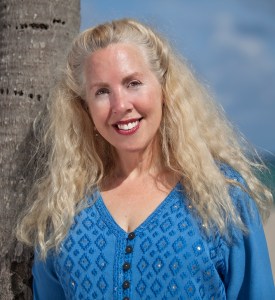
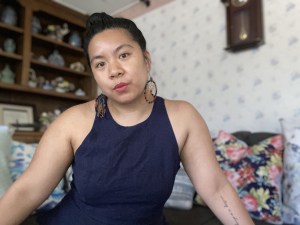
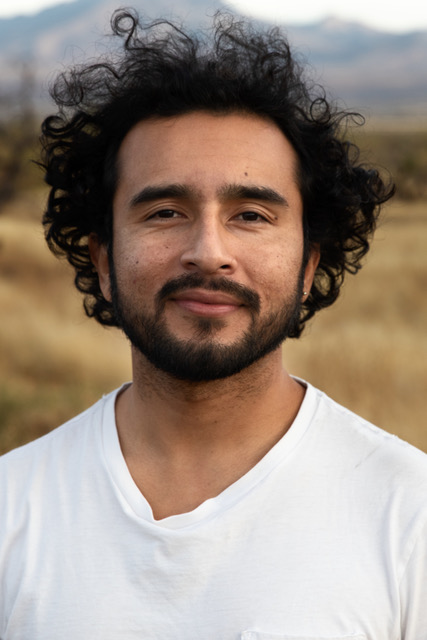
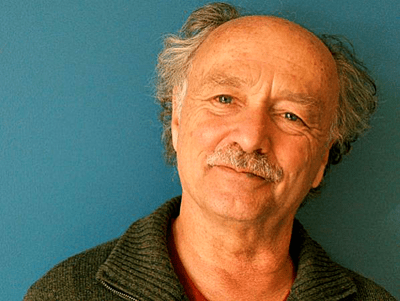
Barbara Bloom, who recently relocated to Bellingham, Washington, shares poems about the deep connection she finds in nature, especially in Santa Cruz, where she lived for over 30 years. Barbara studied poetry with Santa Cruz poets, Joe Stroud and Morton Marcus and taught in the English Department of Cabrillo College for nearly 30 years. In this episode, Barbara reads and discusses poems of departure and the reassurance of perpetual presence in the natural world–a theme that permeates her Santa Cruz poems as well as those about her teenage years with her family on a coastal homestead in British Columbia, Canada. She is a member of the local Hummingbird Poetry Collective and has two volumes of poetry: On the Water Meridian (2007) and Pulling Down the Heavens (2017), both published by Hummingbird Press.
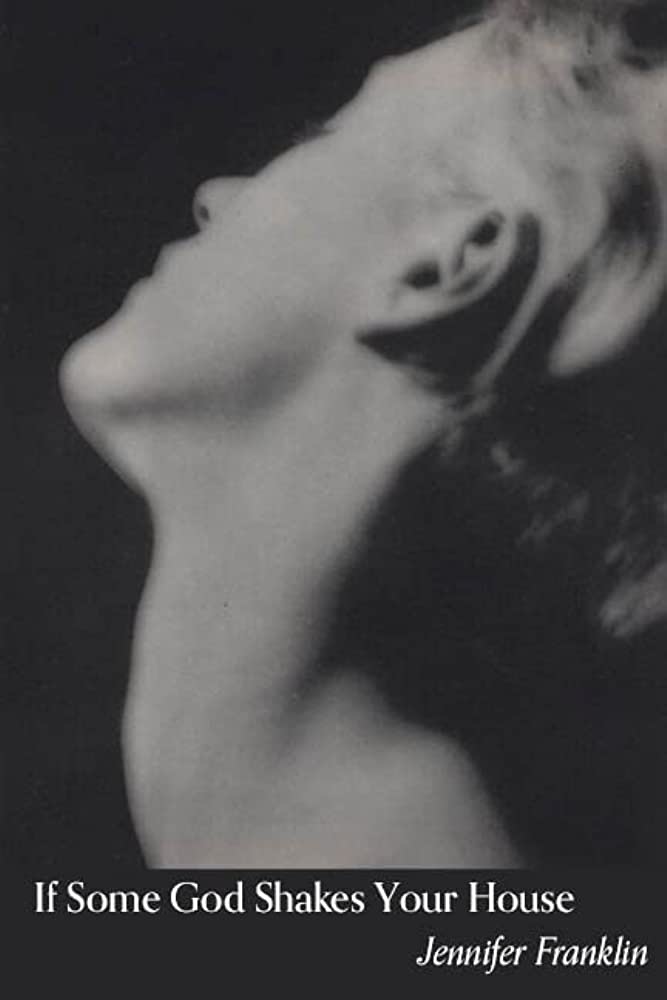
Farnaz talked with Jennifer Franklin, whose third book, If Some God Shakes Your House, has just been published by Four Way Books in March 2023. We discuss If Some God Shakes Your House, in which Franklin has “reimagined Antigone for our times–where filial devotion and ossified roles of gendered labor become the engine of her defiance.” Franklin’s work is honest and riveting, and full of insight about what it means to be a woman. We discuss persona poems, writing about difficult material, ecopoetry, and more.
Denise Duhamel and Dion O’Reilly chat permission, politics, and poetry in this lively wide-ranging discussion.
Denise Duhamel’s most recent books of poetry are Second Story (Pittsburgh, 2021) andScald (2017). Blowout (2013) was a finalist for the National Book Critics Circle Award. A proponent of collaboration, she and Maureen Seaton have co-authored five collections, the most recent of which is CAPRICE (Collaborations: Collected,Uncollected, and New) (Sibling Rivalry Press, 2015). Her nonfiction publications include The Unrhymables: Collaborations in Prose (with Julie Marie Wade, Noctuary Press, 2019). A recipient of fellowships from the Guggenheim Foundation and the National Endowment for the Arts, she is a distinguished university professor in the MFA program at Florida International University in Miami.
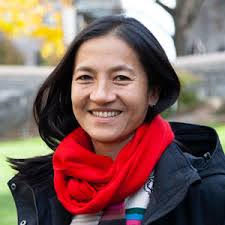
Tsering Wangmo Dhompa is the first Tibetan woman to publish poetry in English. She joins Julie Murphy to read new and favorite poems, as well as the poem When It Rains In Dharmashala by Tenzin Tsundue. They talk about exile, impermanence, and how poems take us from image to mystery.
Tsering Wangmo Dhompa is the author of the poetry books, My Rice Tastes Like the Lake, In the Absent Everyday, and Rules of the House (all from Apogee Press, Berkeley) and three chapbooks. Dhompa’s first non-fiction book, Coming Home to Tibet was published in the US by Shambhala Publications in 2016 and by Penguin, India in 2014. She was born in India and raised in the Tibetan refugee communities in India and Nepal. Dhompa has a PhD in Literature from the University of California, Santa Cruz, and an MFA in Creative Writing from San Francisco State University. She teaches in the English Department at Villanova University.
Listen as Caridad reads poems from her book Tortillera, a work in three parts addressing the journey of a woman claiming her own voice. We talk about desire, the Cuban-American experience, coming out, artist Ana Mendienta…among other things. Tune in!
Gregory Orr was born February 3, 1947 in Albany, New York. He grew up in the rural Hudson Valley. At the age of twelve, he was responsible for the death of a younger brother in a hunting accident, an event that powerfully influenced his ideas about trauma, silence and poetry. When he was fourteen, his family moved to Haiti, where his father worked as a doctor at the Hospital Albert Schweitzer in Deschapelles. The family returned to the States a year later, after his mother’s sudden death. In 1965, at the age of eighteen, he worked as a civil rights volunteer in Mississippi. During that time, he was kidnapped at gunpoint in rural Alabama and held for a week in solitary confinement in the town of Hayneville. These events of his youth form the basis of his memoir, The Blessing, which tells the story of his childhood and how he came to poetry.
The author of more than 10 collections of poetry and several volumes of essays, criticism, and memoir, Gregory Orr is a master of the short, personal lyric. His poetry has been widely anthologized and translated into at least 10 languages. Observes critic Hank Lazer, “From Burning the Empty Nests (1973) to the present, Orr gradually developed the ability to fuse his incredible skill at visual precision—the signature of his image-based work in his very first book—with an insistent musical quality, joining visual precision with a beauty of sound.”
In this week’s episode of The Hive Poetry Collective, Rodrigo Toscano joins Roxi Power to read work from The Charm and the Dread (Fence Books, 2022) and The Cut Point (Counterpath Press, 2023). We hear about his work in the fields of labor organizing, as well as how his work within Latinx, New Orleans, and experimental poetry communities influence his poetics.
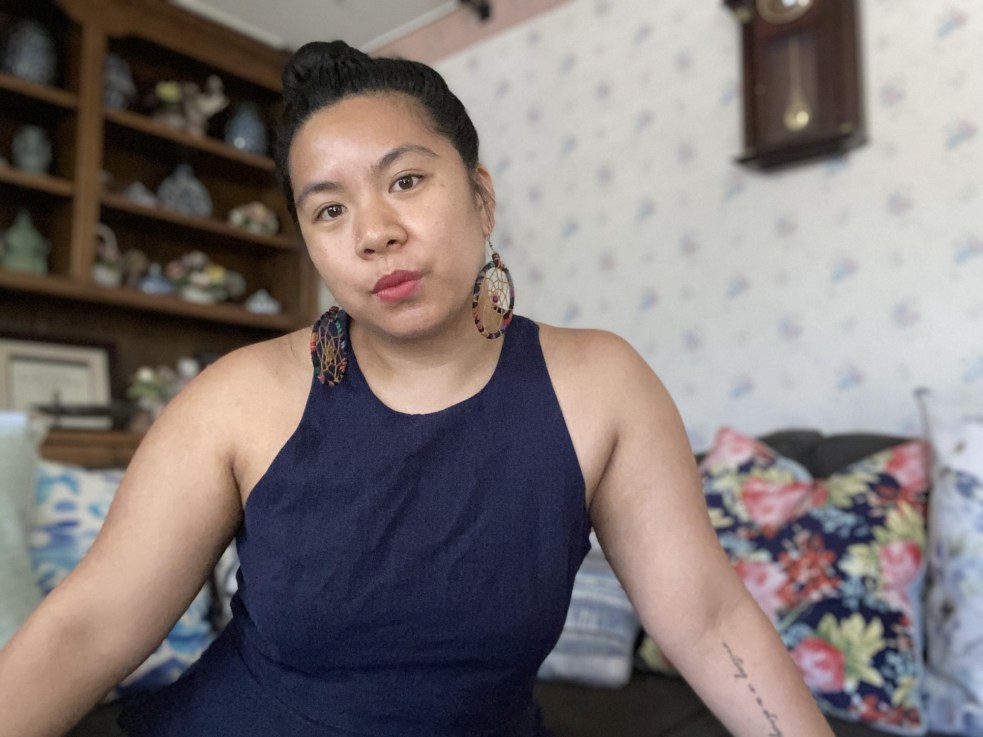
Join host Julie Murphy as she chats with Janice Lobo Sapigao about how the intimate details of our lives are the best way to address big themes in poetry such as immigration, community, connectedness, colonization, and loneliness.
Janice reads new works as well as the poem “Swerte” by Alyza Taguilaso.
Javier Zamora was born in La Herradura, El Salvador in 1990. When he was a year old, his father fled El Salvador due to the US-funded Salvadoran Civil War (1980-1992). His mother followed her husband’s footsteps in 1995 when Javier was about to turn five. Zamora was left at the care of his grandparents who helped raise him until he migrated to the US when he was nine. His first poetry collection, Unaccompanied (Copper Canyon Press, September 2017), explores some of these themes.
In his debut New York Times bestselling memoir, SOLITO (Hogarth, September 2022), Javier retells his nine-week odyssey across Guatemala, Mexico, and eventually through the Sonoran Desert. He travelled unaccompanied by boat, bus, and foot. After a coyote abandoned his group in Oaxaca, Javier managed to make it to Arizona with the aid of other migrants.
Jim Moore has been writing poetry for more than four decades.Before Prognosis from Graywolf in 2021,he wrote, Invisible Strings, published in 2011 by Graywolf Press. In 2012 he received a Guggenheim Fellowship for the work in that book. Underground: New & Selected Poems is available now from Graywolf Press.
He has won the Minnesota Book Award for his poetry four times. Jim has received grants from the Bush Foundation, the Minnesota State Arts Boards, the Loft McKnight and in 2012 from the Guggenheim Foundation. His poems have appeared three times in Pushcart Prize Editions as well as in many magazines, including The New Yorker, The Paris Review, The Nation, American Poetry Review, Harper’s The Kenyon Review, The Threepenny Review, and Water-Stone Review.
Jim lives in Minneapolis and Spoleto, Italy with his wife the photographer JoAnn Verburg. He teaches in the Hamline University MFA Program in St. Paul, Minnesota and is often a Visiting Professor at the Colorado College in Colorado Springs, Colorado. He works online individually with poets from around the country.